
Preservation Periodical: Volume 5, Issue 1
Winter 2026
Furniture With a Past: Uncovering Original Furnishings at the NMAH
By Phaedra Kelley
What began as a summer inventory project soon turned into the scavenger hunt of any history lover’s dreams. Behind collection storage doors, inside AV closets, and lining office spaces, original mid-century furniture from a museum’s early days remain - some in use, some long forgotten.
Between June and August of 2025, my fellow intern Olivia Nash and I surveyed over 452 spaces across the National Museum of American History (NMAH) searching for the tables, benches, and office furniture that once helped define the mid-century modern look and feel of the building when it first opened in 1964.
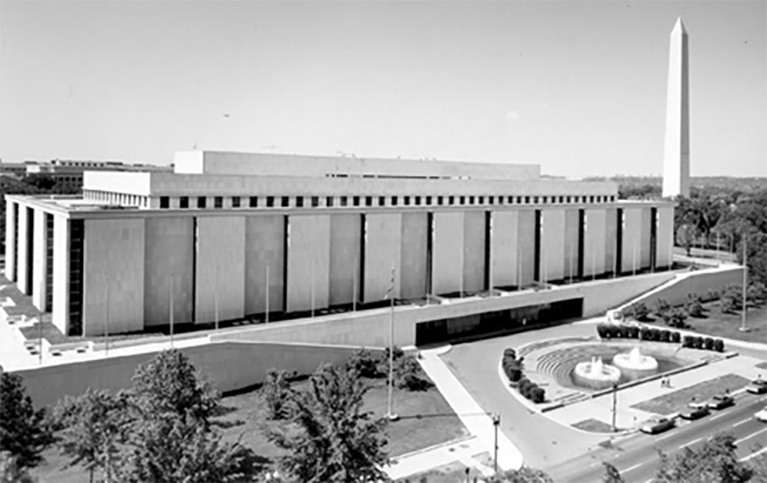
When the NMAH, then called the Museum of History and Technology, was built, the designers had in mind a clear architectural purpose. Designed and constructed during the Cold War, the building reflected the era’s emphasis on national strength and confidence. It was not, however, just the building design that the architects and designers considered, for they also faced the challenge of furnishing this six-story, nearly 800,000 square foot museum. Great care was taken in these considerations.
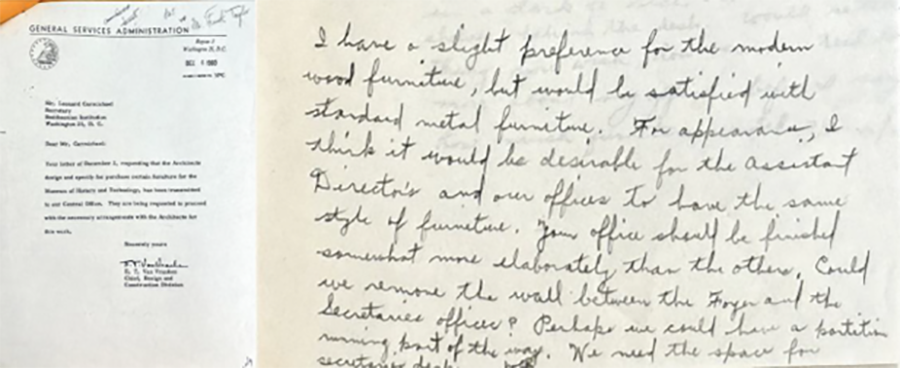
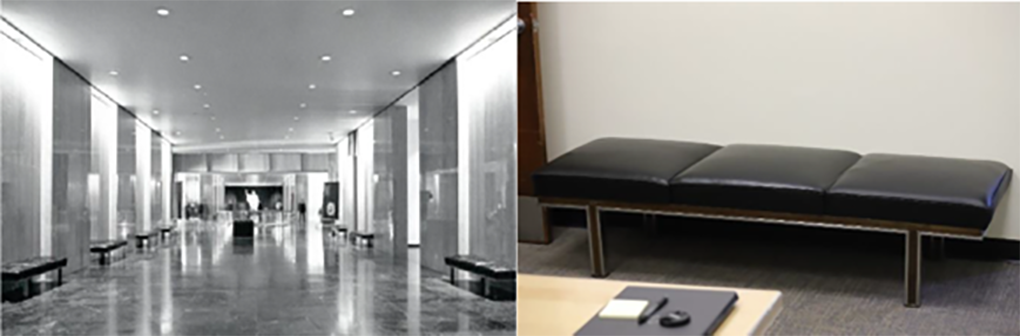
From archival memos and planning documents discovered in the Smithsonian Institution Archives, we know that early decisions, such as whether to opt for metal or wood furniture, were debated in detail. Ultimately, office spaces were fitted primarily with wood desks and credenzas accented with stainless steel hardware, while public areas featured custom-designed benches featuring a stainless-steel frame, black steerhide cushions, and walnut frame infills, designed specifically by the architect of the building, Walker Cain. Additional office furnishings were sourced through the General Services Administration, including standard-issue grey “Art Metal” pieces.
Over time, much of this original furniture was replaced. Ergonomic chairs and standing desks became the new standard, the benches were updated, and surviving original pieces were pushed into surplus storage.
This summer’s initiative, led by Rebecca Kokinda, Associate Director of Building Renovation and Exhibition Services at NMAH, aimed to take stock of what remained. The goal was to identify and retain these key examples of mid-century design and elements of monumental civic architecture of its time.
Our task was to locate, document, research, and tag every piece we could find.
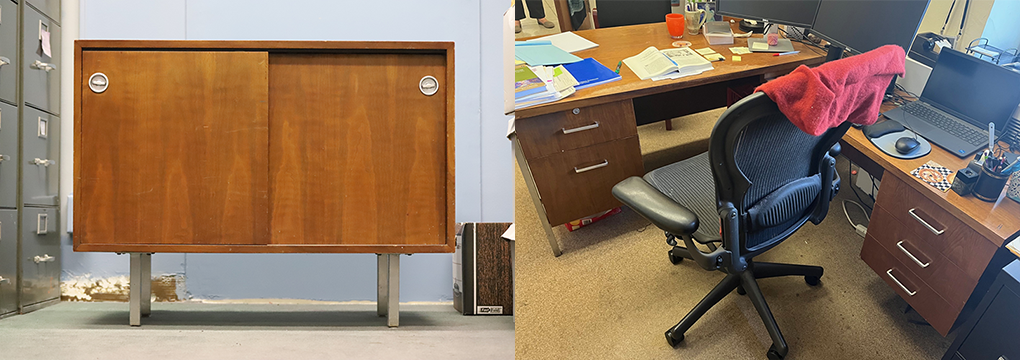
Some discoveries were expected - the same wood and stainless-steel desks and credenzas in office spaces, a few benches found in team and waiting rooms, but others surprised us. We located sixteen Gunlocke chairs dating from 1937 to 1968, three original Burke “Oval Tulip tables, and five Burke “Star Chairs” - the very same model featured in the original Star Trek series. Overall, 165 pieces were inventoried throughout the building.

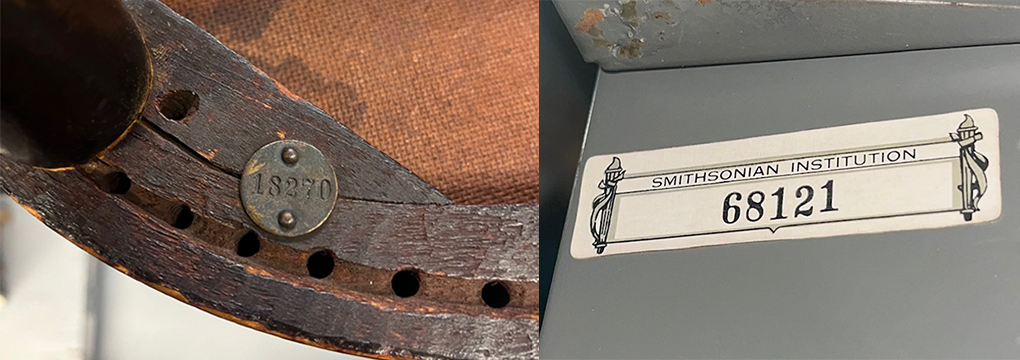
Many pieces still bore numbered tags, but any records linked to those tags appeared to have been long since lost. To address this, we worked closely with the NMAH Procurement Team, which oversees acquisition and inventory of furniture, technology, and goods across the museum to design a standalone tagging system that would allow this original furniture to be tracked independent of the general inventory, helping to prevent future loss or surplus reassignment.
While the Smithsonian is best known for preserving the nation’s history, this project offered a reminder that the museum buildings themselves, and the everyday furnishings inside them, are part of that history too. From a desk that has served curators for sixty years to a bench designed for visitors in a 1960s lobby - these objects have stories of their own. With thoughtful stewardship, they can continue to support the work of the museum, while also standing as quiet witnesses to its past.